


Latest Version
January 26, 2026
Appakia
Education
Android
0
Free
com.appakia.mythicuniverse
Report a Problem
More About Mythic Universe
The Mythical Journey of Perseus: From Hero to Constellation
Have you ever gazed up at the night sky and wondered about the stories behind the stars? One of the most captivating tales is that of Perseus, a hero from ancient mythology who transformed into a constellation. This article will explore how Perseus became a celestial figure, the fascinating lore surrounding him, and the scientific explanations behind the stars that tell his story.
The Legend of Perseus
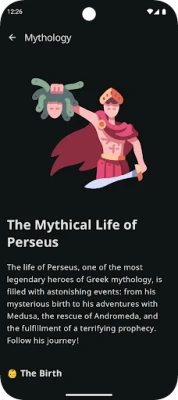
Perseus, a prominent figure in Greek mythology, is renowned for his daring exploits, including the slaying of the Gorgon Medusa. His adventures not only made him a celebrated hero but also earned him a place among the stars. The ancients believed that the gods immortalized Perseus in the sky as a reward for his bravery and heroism.
Perseus in the Night Sky
When you look up at the constellation of Perseus, you can trace the hero's journey through the stars. This constellation is located in the northern hemisphere and is best visible during the autumn months. The stars that form Perseus depict his heroic stance, with notable features such as the bright star Mirfak and the famous variable star Algol.
The Mystery of Algol: The "Demon" Star
Among the stars in the constellation of Perseus, Algol stands out due to its unique flickering brightness. Known as the "Demon Star," Algol has intrigued astronomers and mythologists alike. The ancients attributed its changing brightness to supernatural forces, believing it to be a harbinger of doom or a sign of impending danger.
Ancient Interpretations
In ancient times, Algol's variability was often linked to the myth of Perseus and Medusa. The flickering light was thought to represent the severed head of Medusa, which Perseus held aloft. This connection between the star and the mythological narrative added a layer of intrigue to the constellation, making it a focal point for storytelling and celestial observation.
Modern Astronomy: The Science Behind Algol
Today, we understand that Algol's brightness changes are due to its binary star system. It consists of two stars orbiting each other, with one star eclipsing the other every 2.87 days. This periodic dimming and brightening create the illusion of a flickering star. Modern astronomy has unraveled the mystery behind Algol, transforming it from a mythical "demon" into a fascinating astronomical phenomenon.
Exploring the Cosmos: Myths and Realities
The journey through the stars does not end with Perseus. The night sky is filled with constellations, each with its own rich tapestry of myths and stories. As you explore these celestial patterns, you will discover that many of them are deeply intertwined with human history and culture.
Engaging with the Universe
To deepen your understanding of the cosmos, consider engaging with interactive quizzes and educational resources that explore the myths and science of constellations. These tools can enhance your appreciation for the universe and its wonders, making the experience both entertaining and enlightening.
The Mythical Universe: More Than Just Stories
As you delve into the tales of Perseus and other constellations, you may find that the universe is often more "mythical" than the myths themselves. The stories we tell about the stars reflect our desire to understand the cosmos and our place within it. Each constellation serves as a reminder of our shared human experience, connecting us to the past while inspiring future generations to look up and wonder.
Conclusion: A Celestial Legacy
The transformation of Perseus from a heroic figure in mythology to a constellation in the night sky is a testament to the enduring power of storytelling. As we explore the stars, we uncover not only the scientific truths behind celestial phenomena but also the rich narratives that have shaped our understanding of the universe. So, the next time you gaze at the constellation of Perseus, remember the hero's journey and the timeless tales that continue to inspire us all.
In conclusion, the cosmos is a vast tapestry of myths and realities, where the stories of heroes like Perseus intertwine with the scientific wonders of the universe. Embrace this journey, and you may find that the stars hold more than just light; they carry the weight of our collective imagination and history.
Rate the App
User Reviews















Popular Apps










Editor's Choice