

Latest Version
3.0.1
April 20, 2026
Sava KS
Tools
Android
0
Free
com.sladjan.wifianalyzer
Report a Problem
More About WiFi analyzer - Signal meter
Unlocking the Power of WiFi Analyzer: Your Ultimate Guide to Optimizing Network Performance
In today's digital age, a reliable WiFi connection is essential for both personal and professional use. Understanding how to optimize your WiFi network can significantly enhance your online experience. One of the most effective tools for achieving this is a WiFi Analyzer. This article delves into the capabilities of WiFi Analyzer, highlighting its features and benefits for users seeking to improve their network performance.
What is a WiFi Analyzer?
A WiFi Analyzer is a powerful tool designed to assess the performance of your wireless network. By measuring signal strength and response times, it can determine the distance between your device and the Access Point (AP). This information is crucial for identifying connectivity issues and optimizing your network setup.
Key Features of WiFi Analyzer
Comprehensive Band Support
One of the standout features of WiFi Analyzer is its ability to operate across all WiFi bands, including both 2.4 GHz and 5 GHz frequencies. This versatility allows users to analyze their network performance comprehensively, ensuring that they can make informed decisions about their WiFi setup.
Channel Analysis for Optimal Performance
WiFi Analyzer excels in analyzing the surrounding channels utilized by nearby networks. By identifying which channels are congested and which are less crowded, the tool helps users select the best WiFi channel for their network. This feature is particularly beneficial in densely populated areas where multiple networks may interfere with each other, leading to slower speeds and connectivity issues.
Real-Time Data Visualization
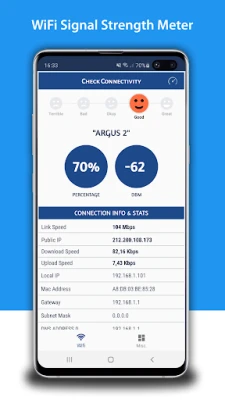
With WiFi Analyzer, users can access real-time live graph data views. This feature provides an immediate visual representation of network performance, allowing users to monitor signal strength, channel usage, and other critical metrics. The ability to visualize data in real-time empowers users to make quick adjustments to their network settings for optimal performance.
Distance Measurement from Access Point
Another valuable feature of WiFi Analyzer is its capability to measure the distance from the device to the Access Point. By assessing signal strength and response times, users can determine how far they are from the AP. This information is vital for troubleshooting connectivity issues and ensuring that devices are within an optimal range for the best performance.
Benefits of Using WiFi Analyzer
Enhanced Network Performance
By utilizing WiFi Analyzer, users can significantly enhance their network performance. The tool's ability to identify the best channels and measure distance from the AP allows for a more stable and faster connection. This is especially important for activities that require high bandwidth, such as streaming, gaming, and video conferencing.
Improved Connectivity
WiFi Analyzer helps users troubleshoot connectivity issues effectively. By understanding the factors affecting their network, users can make informed decisions to improve their connection quality. Whether it's adjusting the placement of the AP or changing the WiFi channel, the insights provided by the analyzer lead to better connectivity.
User-Friendly Interface
Most WiFi Analyzer tools come with a user-friendly interface, making them accessible to individuals with varying levels of technical expertise. This ease of use ensures that anyone can take advantage of the tool's features without needing extensive knowledge of networking.
Conclusion
In conclusion, a WiFi Analyzer is an indispensable tool for anyone looking to optimize their wireless network. With its ability to operate on all WiFi bands, analyze surrounding channels, provide real-time data visualization, and measure distance from the Access Point, it offers a comprehensive solution for enhancing network performance. By leveraging the insights gained from a WiFi Analyzer, users can enjoy a more reliable and efficient online experience.
Investing in a WiFi Analyzer is a step towards achieving a seamless and high-performing network, making it a must-have for both home and office environments.
Rate the App
User Reviews















Popular Apps










Editor's Choice