

Latest Version
1.0.0
September 03, 2025
App Titude
Finance
Android
0
Free
com.toronet.wallet_mobile
Report a Problem
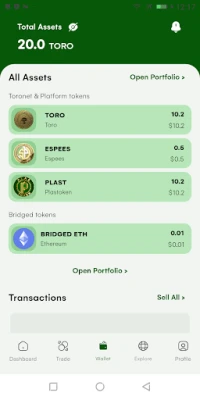
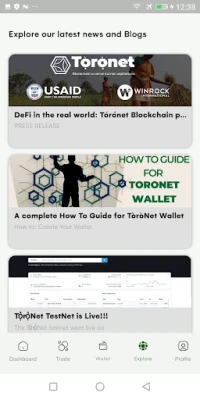
More About Toronet - Mobile Wallet
Unlocking Community Potential: How Blockchain Transforms Economic Models
The secure and transparent nature of blockchain technology fosters social trust, empowering communities to organize and leverage their collective potential. Through the use of smart contracts and tokens, blockchain creates innovative economic models that provide financial opportunities for underserved individuals, enabling them to pursue their aspirations for real-world assets sustainably.
Understanding Blockchain's Role in Community Empowerment
Blockchain technology serves as a decentralized ledger that records transactions across multiple computers. This decentralization ensures that no single entity has control over the entire network, enhancing security and transparency. As communities adopt blockchain, they can build trust among members, facilitating collaboration and collective action.
Smart Contracts: Automating Trust and Efficiency
Smart contracts are self-executing contracts with the terms of the agreement directly written into code. They automatically enforce and execute agreements when predetermined conditions are met. This automation reduces the need for intermediaries, streamlining processes and minimizing costs. By utilizing smart contracts, communities can create efficient systems for resource allocation, governance, and more.
Tokens: Fueling New Economic Models
Tokens are digital assets that represent value or utility within a blockchain ecosystem. They can be used for various purposes, such as facilitating transactions, granting access to services, or representing ownership of assets. By issuing tokens, communities can create new economic models that incentivize participation and investment, ultimately driving growth and sustainability.
Empowering the Underserved: Financial Inclusion through Blockchain
Many individuals around the world lack access to traditional financial services, limiting their ability to invest in their futures. Blockchain technology offers a solution by providing a decentralized platform for financial transactions. This accessibility allows financially underserved individuals to engage in economic activities, such as saving, investing, and trading, that were previously out of reach.
Real-World Assets: Bridging the Gap
Blockchain enables the tokenization of real-world assets, such as real estate, art, and commodities. This process involves converting physical assets into digital tokens that can be easily traded on blockchain platforms. Tokenization democratizes access to investment opportunities, allowing individuals to own fractions of high-value assets and participate in wealth creation.
Sustainable Economic Growth: A Community-Centric Approach
By harnessing the power of blockchain, communities can develop sustainable economic models that prioritize long-term growth over short-term gains. These models encourage collaboration, resource sharing, and equitable distribution of wealth. As communities work together to build their economies, they can create resilient systems that adapt to changing circumstances and support their members' aspirations.
Conclusion: The Future of Community-Driven Economies
Blockchain technology is revolutionizing the way communities organize and operate, fostering trust and collaboration. Through smart contracts and tokens, new economic models emerge that empower financially underserved individuals to achieve their goals sustainably. As more communities embrace blockchain, the potential for transformative change grows, paving the way for a more inclusive and equitable future.
Rate the App
User Reviews











Popular Apps








Editor's Choice