

Latest Version
3.3.5
September 27, 2024
A challenging puzzle game
Games
iOS
67.3 MB
0
Free
Report a Problem
More About The Hamiltonian Circuit
Mastering Grid Puzzles: A Comprehensive Guide to Creating Continuous Circuits
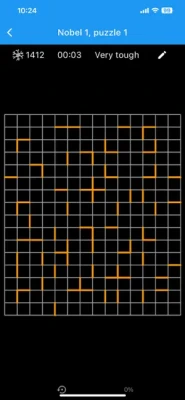
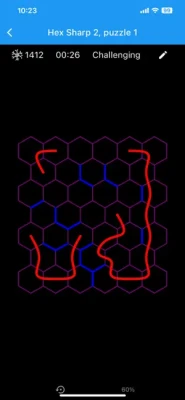
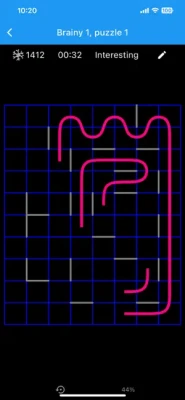
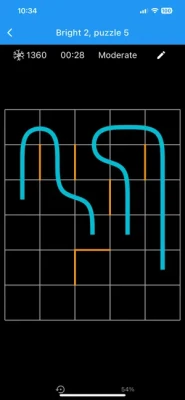
Embarking on the journey of solving grid puzzles can be both exhilarating and challenging. The objective is to navigate through a grid, visiting every square while avoiding walls and ensuring that your path never crosses itself. This article will guide you through the intricacies of creating a continuous circuit, starting from simple grids and advancing to more complex challenges.
Understanding the Basics of Grid Puzzles
To begin your puzzle-solving adventure, it's advisable to start with a manageable 4x4 grid. These smaller grids serve as an excellent introduction to the mechanics of grid puzzles. As you plot your moves, remember to think several steps ahead—consider not just your immediate next move, but also the implications of your choices four or five squares down the line.
Strategies for Success
As you navigate through the grid, you may encounter moments of uncertainty. If you believe you've made an incorrect move, you can easily retrace your steps. Simply follow your previous line, and it will vanish, allowing you to reassess your strategy.
If you find yourself truly stuck, don’t hesitate to utilize the Hints feature. This tool can provide valuable guidance, highlighting mistakes in red that will disappear once corrected. Conversely, if you are on the right track, the system will reward your progress by adding a line to your path.
Finding the Unique Solution
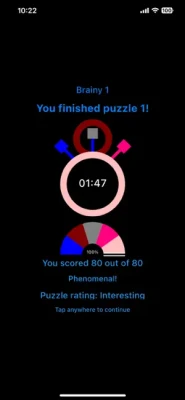
Each puzzle is designed with a single solution. When you successfully uncover it, a sense of accomplishment will wash over you. The satisfaction of completing a grid puzzle is unparalleled, as it signifies not only the resolution of the challenge but also the enhancement of your problem-solving skills.
Progressing Through Grid Sizes
Grid puzzles range from the simple 4x4 configurations to the more daunting 20x20 grids. As you advance in size, the complexity increases significantly, often requiring hours of dedicated thought and strategy. If you need to pause your puzzle-solving session, rest assured that your progress is automatically saved, allowing you to return at your convenience.
The Meditative Nature of Puzzle Solving
Many enthusiasts find that working on these circuits can be a meditative experience. Engaging with grid puzzles not only sharpens your abstract thinking skills but also challenges your brain in meaningful ways. However, it’s important to recognize that while some may find joy in the process, others might experience frustration. Regardless of your experience, the cognitive benefits are undeniable.
A Historical Perspective
The inspiration for these captivating puzzles traces back to the work of Irish mathematician William Rowan Hamilton, who created a similar puzzle in 1856. His innovative approach laid the groundwork for the grid puzzles we enjoy today, which start off easy and progressively become more challenging. Prepare yourself for a rewarding experience as you tackle these brain teasers!
Conclusion: Embrace the Challenge
As you dive into the world of grid puzzles, remember that each challenge is an opportunity to enhance your cognitive abilities and enjoy a fulfilling pastime. Whether you are a novice or an experienced puzzler, the journey through these grids promises to be both stimulating and rewarding. Good luck, and may your circuits be continuous!
For more information, please refer to our Terms of Use.
Rate the App
User Reviews














Popular Apps










Editor's Choice