

Latest Version
1.0.11
February 15, 2026
Himalaya Computing
Education
Android
0
Free
com.himalayac.teia
Report a Problem
More About Teia - 3D Solar System
Exploring the Mysteries of Our Solar System: Rilles, Rupes, and More
Have you ever gazed up at the night sky and wondered about the fascinating features of our Solar System? From the rilles on the Moon to the enigmatic rupes on Mercury, the celestial bodies that orbit our Sun are filled with wonders waiting to be explored. This article delves into some of the most intriguing aspects of our planetary neighbors, providing insights into their unique characteristics and the science behind them.
Understanding Rilles on the Moon
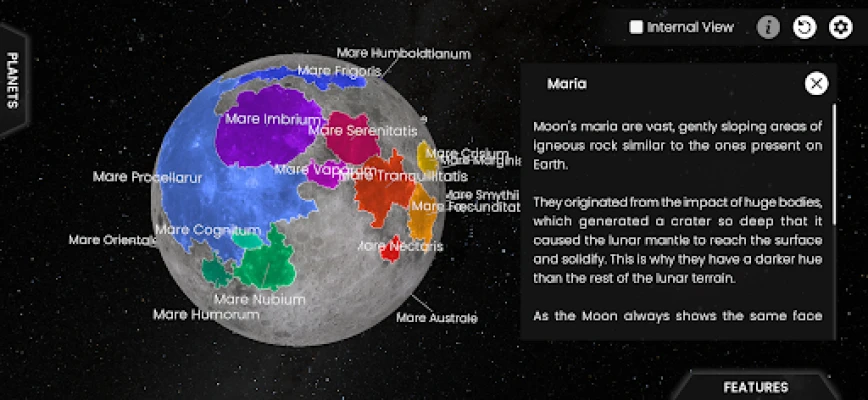
The Moon, Earth's closest celestial companion, is home to various geological features, including rilles. These long, narrow channels are believed to be formed by ancient volcanic activity or the collapse of lava tubes. Rilles can stretch for hundreds of kilometers and vary in width, offering a glimpse into the Moon's tumultuous past.
Scientists categorize rilles into two main types: sinusoidal rilles, which have a winding, curvy shape, and straight rilles, which are more linear. Studying these formations helps researchers understand the Moon's geological history and the processes that shaped its surface.
Rupes on Mercury: The Cliffs of the Closest Planet
Moving inward toward the Sun, we encounter Mercury, the smallest planet in our Solar System. One of its most striking features is the rupes, or cliffs, that adorn its surface. These steep, rugged formations can rise hundreds of meters high and are thought to be the result of the planet's cooling and contraction over billions of years.
Rupes provide valuable information about Mercury's geological activity and its evolution. By studying these cliffs, scientists can gain insights into the planet's history and the forces that have shaped its landscape.
Jupiter's Pearl Necklace: A Celestial Wonder
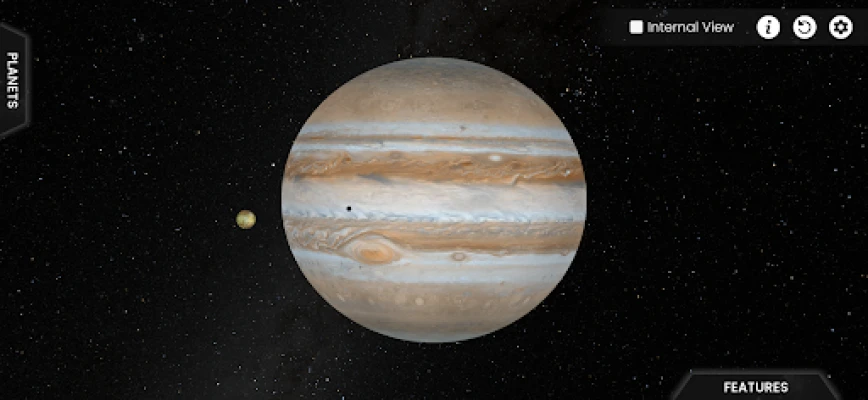
Jupiter, the largest planet in our Solar System, is renowned for its stunning beauty and complex atmospheric phenomena. Among its many features, some observers have likened its iconic Great Red Spot to a "pearl necklace." This massive storm, larger than Earth, has been raging for centuries and showcases the dynamic nature of Jupiter's atmosphere.
Jupiter's atmosphere is characterized by its colorful bands and swirling clouds, which are a result of its rapid rotation and the interplay of various gases. The planet's striking appearance captivates astronomers and stargazers alike, making it a focal point for exploration and study.
The Face on Mars: Myth or Reality?
One of the most enduring mysteries of our Solar System is the so-called "Face on Mars." Discovered in 1976 by the Viking 1 orbiter, this formation sparked widespread speculation about the possibility of extraterrestrial life. However, subsequent missions have revealed that the "face" is merely a natural rock formation, shaped by erosion and lighting conditions.
Despite the debunking of this myth, Mars continues to intrigue scientists. The planet's surface is dotted with features such as valleys, canyons, and polar ice caps, all of which provide clues about its past and potential for harboring life.
The Intense Blue of Neptune: A Planet of Mystery
Neptune, the eighth planet from the Sun, is known for its striking blue color, which is primarily due to the presence of methane in its atmosphere. This gas absorbs red light and reflects blue light, giving Neptune its vivid hue. The planet's deep blue color is not just a visual marvel; it also hints at the complex atmospheric dynamics at play.
Neptune's atmosphere is characterized by strong winds and storms, making it one of the most dynamic planets in our Solar System. Studying its weather patterns and atmospheric composition helps scientists understand the processes that govern planetary atmospheres beyond our own.
A Journey Through the Solar System
To truly appreciate the wonders of our Solar System, one must explore each planet and its unique features. The following celestial bodies are part of this incredible journey:
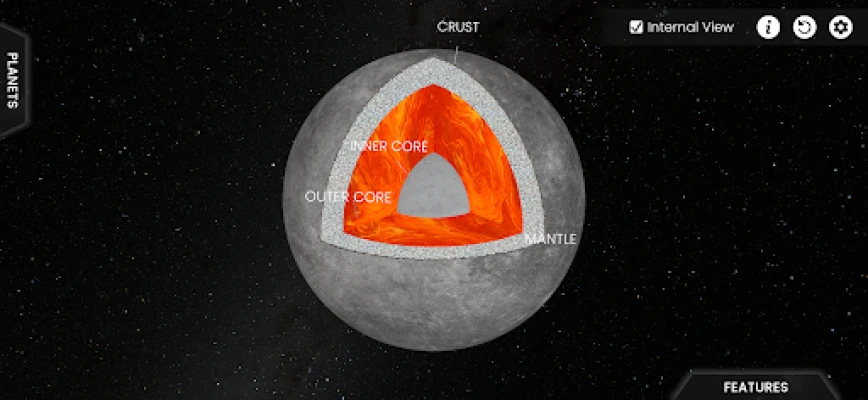
- Mercury: The closest planet to the Sun, known for its extreme temperatures and rugged terrain.
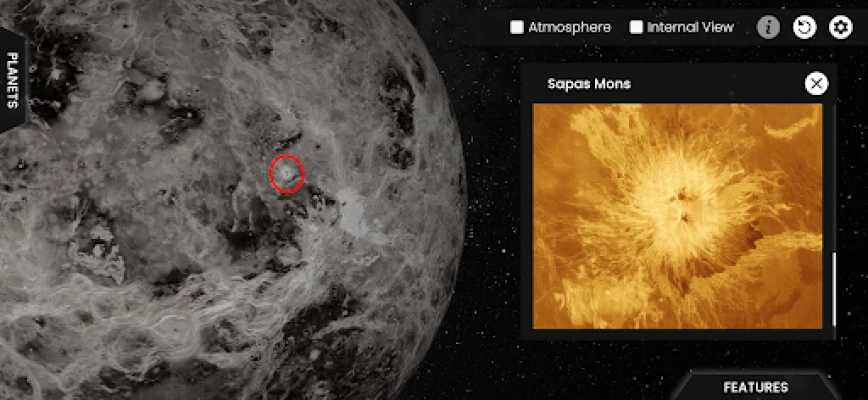
- Venus: Often called Earth's twin, Venus has a thick atmosphere and surface temperatures hot enough to melt lead.
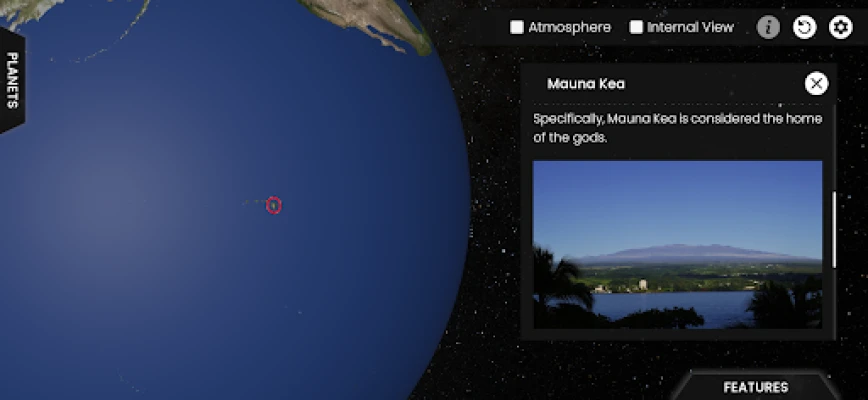
- Earth: Our home planet, teeming with life and diverse ecosystems.
- The Moon: Earth's natural satellite, rich in geological history and features like rilles.
- Mars: The Red Planet, with its intriguing surface and potential for past life.
- Jupiter: The gas giant, famous for its Great Red Spot and numerous moons.
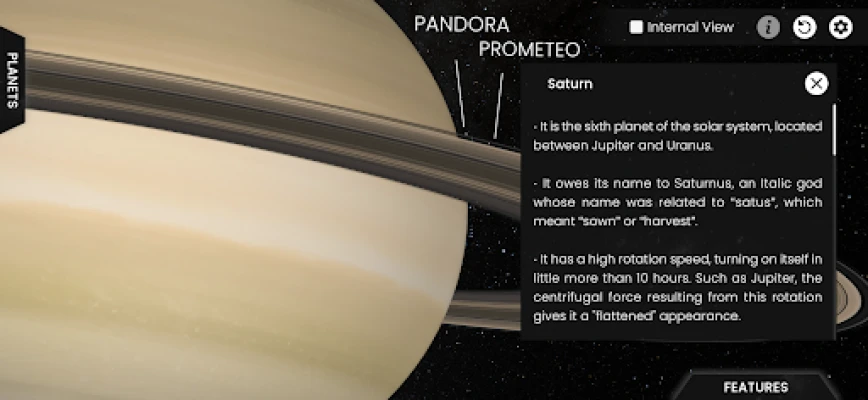
- Saturn: Known for its stunning ring system, Saturn is a marvel of the Solar System.
- Uranus: An ice giant with a unique tilt, giving it extreme seasonal variations.
- Neptune: The farthest planet from the Sun, known for its deep blue color and dynamic atmosphere.
Conclusion: A Universe of Discovery
The Solar System is a treasure trove of mysteries and wonders, each planet offering unique insights into the cosmos. From the rilles of the Moon to the intense blue of Neptune, the features of these celestial bodies invite us to explore and understand our place in the universe. With advancements in technology and ongoing research, the secrets of our Solar System continue to unfold, inspiring future generations of astronomers and explorers.
Developed by Himalaya Computing and Órbita Bianca, this comprehensive collection of features spans over 40 pages, providing a detailed look at the planets and their remarkable characteristics. Embark on this journey and discover the beauty and complexity of our Solar System like never before.
Rate the App
User Reviews














Popular Apps










Editor's Choice