


Latest Version
1.5.2
November 10, 2024
Self-gravity simulation
Games
iOS
7.4 MB
0
Free
Report a Problem
More About Star Cluster Simulator
Discover the Fascinating Evolution of Stars: A Journey Through the Cosmos
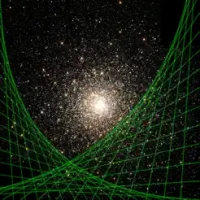
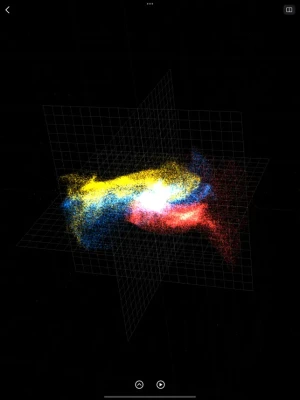
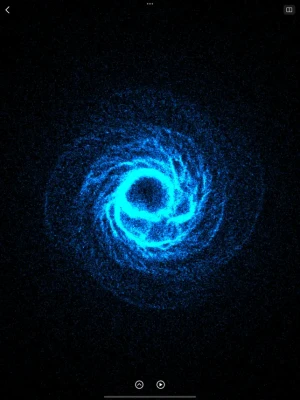
Embark on a captivating journey as you relax and witness the mesmerizing evolution of stars. These celestial bodies, shaped by the forces of self-gravity, create stunning formations that will both surprise and impress you. In this article, we will explore the life cycle of stars, their various shapes, and the incredible phenomena that occur in the universe.
The Life Cycle of Stars
Stars undergo a remarkable transformation throughout their existence. Understanding their life cycle is essential to appreciating the beauty of the cosmos. The life cycle of a star can be divided into several key stages:
- Stellar Nebula: The journey begins in a stellar nebula, a vast cloud of gas and dust. Here, gravity pulls the particles together, forming clumps that will eventually ignite into stars.
- Protostar: As the clumps of gas and dust collapse, they heat up and form protostars. This stage is characterized by the accumulation of mass and the onset of nuclear fusion.
- Main Sequence Star: Once nuclear fusion begins, the star enters the main sequence phase, where it spends the majority of its life. During this time, it fuses hydrogen into helium, producing immense energy and light.
- Red Giant or Supergiant: As the star exhausts its hydrogen fuel, it expands into a red giant or supergiant. This phase is marked by the fusion of heavier elements, leading to the creation of new materials.
- Stellar Death: The end of a star's life can take different forms. Smaller stars shed their outer layers, creating beautiful planetary nebulae, while massive stars explode in spectacular supernovae, leaving behind neutron stars or black holes.
The Shapes of Stars: A Visual Delight
As stars evolve, they take on various shapes and forms, each more stunning than the last. The interplay of gravity and nuclear forces creates a visual spectacle that captivates astronomers and stargazers alike. Here are some of the fascinating shapes you might observe:
- Globular Clusters: These spherical collections of stars are tightly bound by gravity, creating a dazzling display of twinkling lights.
- Open Clusters: Unlike globular clusters, open clusters are loosely bound and often contain younger stars, showcasing a more scattered appearance.
- Binary and Multiple Star Systems: Many stars exist in pairs or groups, orbiting each other in intricate patterns that highlight the complexity of gravitational interactions.
- Planetary Nebulae: The remnants of dying stars, these colorful shells of gas and dust exhibit intricate shapes, often resembling cosmic flowers.
- Supernova Remnants: The explosive death of a massive star results in stunning remnants that can take on various forms, from filaments to shells, creating breathtaking cosmic art.
The Science Behind Stellar Evolution
The evolution of stars is not just a visual phenomenon; it is also a scientific marvel. The processes that govern stellar evolution involve complex physics, including:
- Nuclear Fusion: The core of a star is where nuclear fusion occurs, converting hydrogen into helium and releasing vast amounts of energy. This process is fundamental to a star's life and brightness.
- Gravitational Forces: Gravity plays a crucial role in the formation and evolution of stars. It governs the collapse of gas clouds and the interactions between stars in clusters.
- Element Formation: Stars are responsible for creating the elements that make up the universe. Through nuclear fusion, they produce heavier elements, which are released into space during stellar death.
Why Observing Stars is Important
Observing the evolution of stars is not only a source of wonder but also a vital aspect of understanding our universe. Here are a few reasons why stargazing is significant:
- Understanding Cosmic History: By studying stars, astronomers can trace the history of the universe, gaining insights into its formation and evolution.
- Exploring Exoplanets: Many stars host planets in their orbits. Observing these stars helps scientists identify potentially habitable exoplanets.
- Advancing Technology: The tools and techniques developed for stargazing often lead to advancements in technology that benefit other fields.
Conclusion: A Cosmic Adventure Awaits
As you relax and observe the evolution of stars, you embark on a cosmic adventure filled with wonder and discovery. The shapes and transformations of these celestial bodies, driven by self-gravity, will undoubtedly surprise and impress you. Whether you are an amateur astronomer or a seasoned astrophysicist, the universe offers endless opportunities for exploration and understanding. So, grab your telescope, find a dark sky, and let the stars guide you on your journey through the cosmos.
Rate the App
User Reviews















Popular Apps










Editor's Choice