Latest Version
0.18
October 13, 2024
WPC
Games
iOS
181.1 MB
0
Free
Report a Problem
More About Ship Maneuvering Simulator
Understanding Ship Maneuvering Dynamics: Key Factors in Marine Simulation
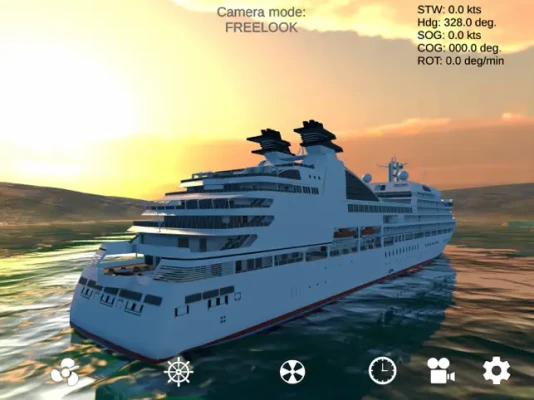
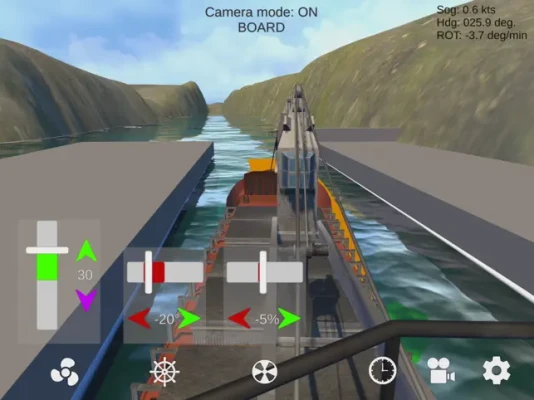
In the realm of marine simulation, understanding the intricacies of ship maneuvering is essential for creating realistic and engaging experiences. This article delves into critical aspects such as the astern effect of the propeller, drift during turns, pivot point movement, and the effectiveness of rudders and bow thrusters. By exploring these elements, we can appreciate how they contribute to the overall dynamics of ship handling in a simulated environment.
The Astern Effect of the Propeller
The astern effect, often referred to as the "backing effect," plays a significant role in how a vessel behaves when moving in reverse. When a ship's propeller rotates in the opposite direction, it generates a unique flow of water that affects the vessel's trajectory. This phenomenon is particularly pronounced in larger ships, where the propeller's size and power can lead to substantial lateral movement.
Understanding the astern effect is crucial for accurate ship handling simulations. It allows players to anticipate how their vessel will respond when reversing, ensuring a more immersive experience. By incorporating this effect into the simulation, users can better grasp the complexities of maneuvering large vessels in confined spaces, such as ports or narrow channels.
Drift During Turns: Navigating the Waters
Drift during turns is another vital aspect of ship maneuvering that affects how a vessel navigates through water. When a ship turns, it does not simply pivot around a fixed point; instead, it experiences a lateral movement known as drift. This drift is influenced by various factors, including the ship's speed, the angle of the turn, and the hydrodynamic forces acting on the hull.
In a realistic marine simulation, accurately modeling drift during turns enhances the player's ability to maneuver effectively. By simulating the forces at play, users can learn to adjust their steering and throttle inputs to maintain control during complex maneuvers. This understanding is essential for operating different types of vessels, from cargo ships to supply ships and even battle ships.
Pivot Point Movement: The Center of Rotation
The pivot point is the center around which a ship rotates when turning. Its location varies depending on the ship's speed and the direction of the turn. Understanding pivot point movement is crucial for effective ship handling, as it determines how the vessel will respond to steering inputs.
In a simulation environment, accurately representing pivot point movement allows players to predict how their ship will behave during turns. This knowledge is particularly important when navigating tight spaces or performing complex maneuvers, such as docking or undocking. By mastering pivot point dynamics, users can enhance their skills and confidence in ship handling.
Rudder Effectiveness: The Role of Propeller Flow and Ship Velocity
The effectiveness of a ship's rudder is significantly influenced by the flow of water generated by the propeller and the vessel's own velocity. When a ship is moving forward, the propeller creates a strong flow of water over the rudder, enhancing its effectiveness. Conversely, when a ship is moving astern, the rudder's effectiveness may diminish due to the altered flow dynamics.
Incorporating these factors into a marine simulation allows players to experience the nuances of rudder control. By understanding how propeller flow and ship velocity interact, users can make informed decisions about steering and maneuvering, leading to more successful navigation in various scenarios.
Bow Thruster Effectiveness: Influences of Ship Velocity
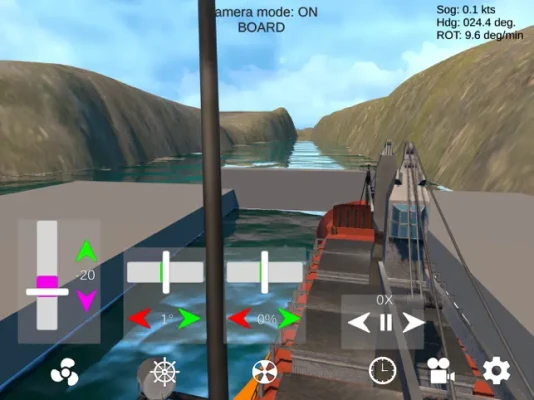
Bow thrusters are auxiliary propulsion devices that enhance a ship's maneuverability, particularly in tight spaces. Their effectiveness is closely tied to the ship's velocity. At lower speeds, bow thrusters can provide significant lateral movement, allowing for precise positioning. However, as the ship's speed increases, the effectiveness of the bow thruster may diminish due to the increased hydrodynamic forces acting on the vessel.
In a sandbox-style marine simulation, accurately modeling bow thruster effectiveness based on ship velocity is essential for creating a realistic experience. Players can experiment with different speeds and maneuvers, gaining a deeper understanding of how to utilize bow thrusters effectively in various situations.
Future Developments: Expanding the Simulation Environment
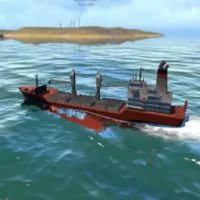
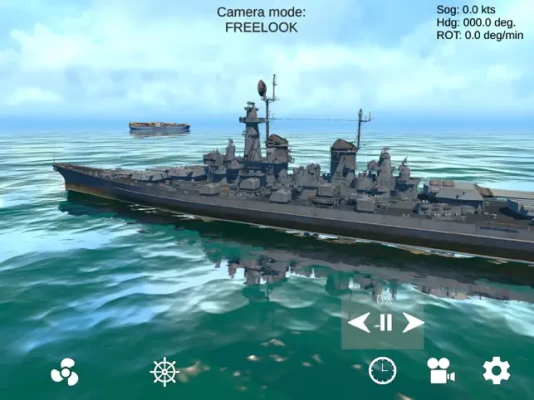
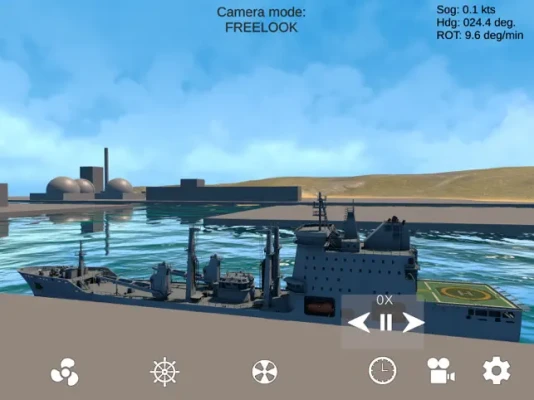
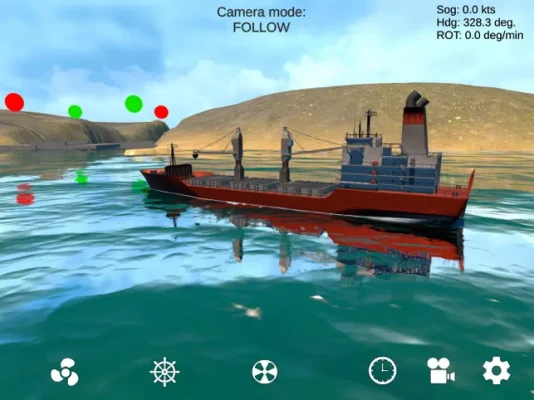
Currently, the simulation features three distinct types of vessels: cargo ships, supply ships, and battle ships. Each ship type presents unique challenges and requires different handling techniques. As the simulation evolves, there are plans to introduce additional vessels, further enriching the gameplay experience.
The sandbox environment includes a diverse range of settings, such as seas, rivers, and ports, with customizable current conditions. Future updates will also incorporate wind effects, adding another layer of complexity to ship handling. By simulating real-world environmental factors, players can develop their skills in a more dynamic and challenging setting.
Conclusion: Mastering Ship Maneuvering in Simulation
Understanding the dynamics of ship maneuvering is crucial for anyone looking to excel in marine simulations. By exploring the astern effect of the propeller, drift during turns, pivot point movement, and the effectiveness of rudders and bow thrusters, players can gain valuable insights into the complexities of ship handling. As the simulation continues to evolve, users will have the opportunity to refine their skills and navigate a realistic maritime environment, preparing them for real-world challenges in marine operations.
Rate the App
User Reviews














Popular Apps









Editor's Choice