




Latest Version
1.1.2
September 19, 2024
伟斌 郑
Games
iOS
197.1 MB
0
Free
Report a Problem
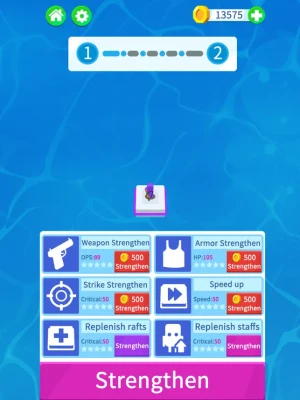
More About Rafts Duel
Survive the High Seas: A Thrilling Adventure Awaits
In a gripping tale of survival, an ocean-going ship has tragically capsized, leaving its passengers fighting for their lives in the vast, unforgiving sea. As the survivors find themselves adrift, they must navigate not only the treacherous waters but also the darker side of human nature. This article delves into the heart of this harrowing experience, exploring the challenges and strategies for survival amidst chaos.
Finding Temporary Safety: The Rafts
After the ship capsizes, the first instinct is to seek safety. Fortunately, rafts are scattered around, providing a crucial lifeline for those who manage to grab hold. These rafts serve as temporary sanctuaries, allowing survivors to regroup and assess their situation. However, the ocean is vast, and the threat of danger looms large. Survivors must remain vigilant, as the sea can be both a refuge and a perilous trap.
Uniting for Survival: The Power of Teamwork
As the initial shock wears off, the reality of limited resources sets in. Survivors quickly realize that cooperation is essential for survival. Forming alliances can mean the difference between life and death. By pooling resources, sharing skills, and supporting one another, survivors can create a stronger team capable of facing the challenges ahead. In this dire situation, unity becomes a powerful weapon against despair.
Confronting the Dark Side: The Struggle for Resources
As hope begins to flicker, a new nightmare emerges. A small faction of survivors, driven by desperation, starts to turn against one another. The struggle for limited resources leads to conflict, threatening the fragile bonds formed in the wake of the disaster. It becomes clear that survival is not just about finding food and water; it’s also about maintaining humanity in the face of adversity. Navigating these interpersonal dynamics is crucial for long-term survival.
Identifying the Villain: The Quest for Leadership
In the midst of chaos, a leader must emerge. The survivors need to identify the leading villain—those who exploit fear and sow discord among the group. By recognizing these threats, the team can strategize to confront and defeat them. Leadership is not just about authority; it’s about inspiring hope and fostering collaboration. A strong leader can unite the group, turning a band of frightened individuals into a cohesive team ready to face the challenges of the sea.
Strategies for Survival: Building Your Team
To thrive in this hostile environment, survivors must adopt effective strategies. Here are some key approaches:
- Assess Skills: Identify the unique skills each survivor brings to the table. Whether it’s medical knowledge, navigation skills, or survival tactics, leveraging these abilities can enhance the team’s chances of survival.
- Resource Management: Establish a system for managing resources. Rationing food and water, as well as sharing supplies, can help ensure that everyone has a fair chance of survival.
- Conflict Resolution: Develop strategies for resolving conflicts peacefully. Open communication and mediation can prevent disputes from escalating into violence.
- Establish Roles: Assign specific roles based on individual strengths. Whether it’s scouting for food, maintaining the raft, or keeping watch, clear roles can improve efficiency and morale.
Conclusion: The Journey Ahead
Surviving the aftermath of a shipwreck is a daunting challenge, but it also presents an opportunity for growth and resilience. By uniting with fellow survivors, confronting the darker aspects of human nature, and establishing strong leadership, individuals can navigate the treacherous waters of the sea. The journey ahead may be fraught with danger, but with determination and teamwork, hope can prevail even in the most desperate of circumstances.
As the survivors embark on this perilous adventure, they must remember that survival is not just about enduring the elements; it’s about forging connections, overcoming adversity, and ultimately, finding a way back to safety together.
Rate the App
User Reviews















Popular Apps










Editor's Choice