

Latest Version
1.8.10
October 09, 2024
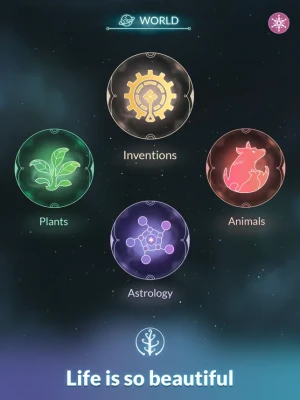
Explore the beautiful life
Games
iOS
89 MB
0
Free
Report a Problem
More About Nonogram Life
Mastering Discrete Tomography Puzzles: A Comprehensive Guide
Discrete tomography puzzles, often referred to as nonograms or picross, offer a unique blend of logic and creativity. These engaging challenges require players to decipher clues that indicate the number of filled squares in rows and columns, ultimately revealing a hidden pixel art image. In this article, we will explore the rules, features, and strategies to excel in these captivating puzzles.
Understanding the Rules of Discrete Tomography
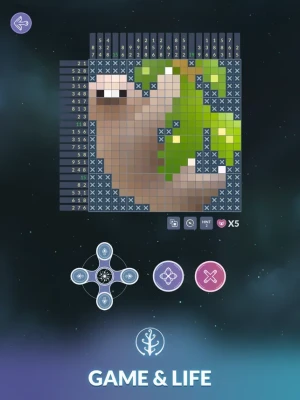
At the core of discrete tomography puzzles lies a simple yet intriguing rule. The numbers provided as clues represent the count of consecutive filled squares in a row or column. For instance, a clue of "4 8 3" signifies that there are groups of four, eight, and three filled squares, with at least one blank square separating each group. This structure forms the foundation for solving the puzzle, as players must interpret these clues to fill in the grid accurately.
Key Features of Discrete Tomography Puzzles
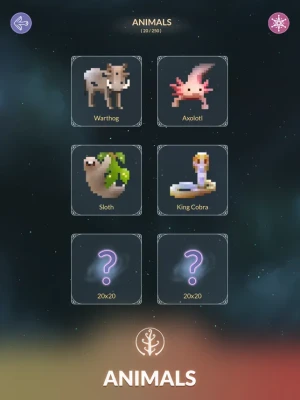
- Handcrafted Pixel Art: Each puzzle culminates in a beautifully designed pixel art image, providing a rewarding visual experience upon completion.
- Diverse Topics: Players can enjoy a variety of themes, ensuring that there is always something new and exciting to explore.
- Helpful Hints: When faced with challenging sections, players can utilize hints to guide them through difficult moments, enhancing the overall experience.
- User-Friendly Controls: The game features intuitive controls, allowing players to navigate using either drag-and-drop or a directional pad (d-pad) for seamless gameplay.
- Relaxing Soundtrack: Mindfulness is encouraged through soothing music, creating a calming atmosphere while solving puzzles.
- Auto-Save Feature: Players can rest assured that their progress is saved automatically, allowing them to resume their sessions at any time.
- Marking for Easier Solving: Utilizing the Mark (X) feature can simplify the puzzle-solving process, helping players keep track of their progress.
Effective Strategies for Solving Discrete Tomography Puzzles
While some puzzles may appear straightforward, mastering discrete tomography requires a blend of logic and strategy. Here are some effective techniques to enhance your puzzle-solving skills:
1. Start with Simple Rows and Columns
Begin by focusing on simpler puzzles, where you can analyze one row or column at a time. This approach allows you to determine the positions of filled squares and blank spaces effectively. By systematically working through each row or column, you can gradually fill in the grid and eliminate uncertainties.
2. Utilize "What If?" Reasoning
As puzzles become more complex, employing "what if?" reasoning becomes essential. This technique involves considering multiple rows or columns simultaneously to identify contradictions. For example, if placing a filled square in one cell leads to an impossible configuration elsewhere, you can conclude that the cell must be blank. This logical deduction is crucial for solving more challenging puzzles.
3. Look for Overlapping Clues
Advanced solvers often look for overlapping clues that can provide additional information. By analyzing how clues interact with one another, you can uncover hidden patterns and make informed decisions about where to place filled squares. This deeper level of reasoning can significantly expedite the solving process.
4. Practice Patience and Persistence
Solving discrete tomography puzzles can be a time-consuming endeavor, especially as the difficulty increases. It’s important to practice patience and persistence. If you find yourself stuck, take a break and return with a fresh perspective. Often, stepping away for a moment can lead to new insights and solutions.
Conclusion: Embrace the Challenge of Discrete Tomography
Discrete tomography puzzles offer a delightful combination of logic, creativity, and problem-solving. By understanding the rules, leveraging the features, and employing effective strategies, you can enhance your skills and enjoy the rewarding experience of uncovering beautiful pixel art. Whether you are a beginner or an advanced solver, these puzzles provide endless opportunities for fun and mental exercise. So grab your pencil or stylus, and dive into the captivating world of discrete tomography puzzles!
Rate the App
User Reviews












Popular Apps










Editor's Choice