
Latest Version
1.3.21
July 09, 2025
CyberSports
Games
Android
0
Free
com.soulplayinggames.mindsofnations
Report a Problem
More About Minds of Nations
Exploring the Evolution of Nations: A Journey Through the Minds of Nations
In a world where souls seek growth and enlightenment, our protagonist, Kanli, embarks on a transformative journey. Disillusioned by the limitations of earthly nations, Kanli is presented with an extraordinary opportunity to create thriving states that endure the trials of time and scarcity. This article delves into the profound concepts explored in Minds of Nations, where the nation becomes a crucible for soul evolution.
1. The Nation as a School for Souls
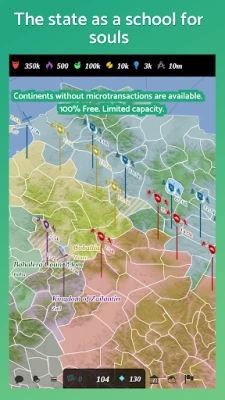
In Minds of Nations, players assume the role of a custodian of a state across millennia. This nation serves not only as a political entity but also as a nurturing ground for souls eager to transcend their earthly existence. The challenge lies in balancing the material needs of the community with the spiritual growth of its inhabitants. A stagnant state can trap souls in cycles of fear and vice, while a weak state may fail to provide the necessary opportunities for growth.
2. Religion: A Pathway to Transformation
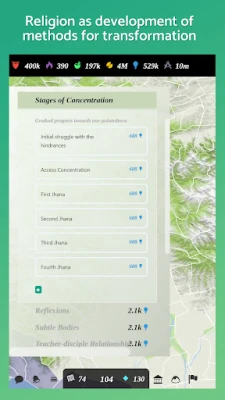
Religion in this context is redefined as a means of personal transformation rather than a popularity contest. Souls, whether incarnated or not, contribute ideas that shape the spiritual landscape of the nation. Ascetics, weary of the perpetual cycle of birth and rebirth, develop methods for transcending earthly attachments. Techniques such as meditation, prayer, and mindfulness emerge, focusing on liberating individuals from the chains of desire and hatred. The emphasis is on the quality of the spiritual path rather than the quantity of followers.
3. Governance: Tailored Solutions for Community Challenges
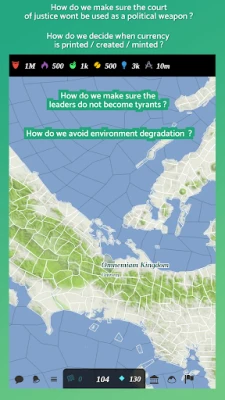
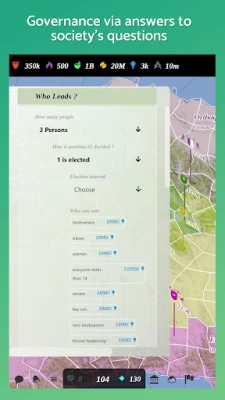
Rather than adhering to rigid political ideologies like Communism or Democracy, Minds of Nations encourages players to craft governance structures that address specific communal questions. Who leads the nation? How is leadership determined? These questions allow for diverse leadership models, from councils to individual rulers, fostering a dynamic approach to governance. Each aspect of community management, from economics to justice, is approached with the same level of scrutiny and creativity.
4. The Evolution of Effects Over Time
As nations evolve, so do the effects of their decisions. The game incorporates a realistic timeline where the consequences of actions manifest over generations, allowing players to witness the long-term impact of their governance choices.
5. Resource-Dependent Changes
In Minds of Nations, the effects of governance and societal decisions are intricately linked to the production of associated resources. This connection emphasizes the importance of sustainable practices and resource management in shaping the future of the nation.
6. Realism Through Algorithms
The game employs sophisticated algorithms to simulate realistic scenarios, ensuring that players experience the complexities of nation-building. These algorithms account for various factors, including resource availability, societal needs, and historical context.
7. Technology: A Broad Spectrum of Subjects
Instead of a linear tech tree, Minds of Nations presents technology as a collection of general subjects. This approach allows players to explore diverse technological advancements that can influence their nation's development in multifaceted ways.
8. The Reality of Armies and Resources
In this simulation, armies are not just abstract entities; they require sustenance. Soldiers are recruited from the labor force, emphasizing the interconnectedness of military and civilian life. This realism adds depth to the strategic decisions players must make regarding warfare and resource allocation.
9. The Impact of War, Lies, and Propaganda
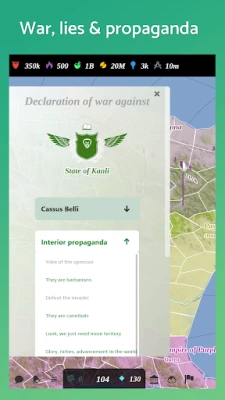
The game critically examines the role of politics in shaping societal perceptions. It explores how propaganda and misinformation can distort reality, leading to historical atrocities. Players must navigate these treacherous waters, understanding the psychological impact of their decisions on the collective consciousness.
10. Karmic Years and Soul Cycles
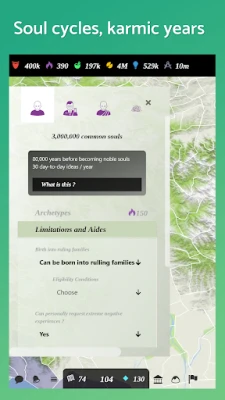
Incorporating the concept of karma, Minds of Nations introduces karmic years that affect the evolution of souls within the nation. Nations that engage in aggression face extended periods of stagnation, as emotional traumas from conflict hinder the emergence of new ideas and innovations.
11. Managing the Astral Plane
The game also delves into the management of the astral plane, exploring the spiritual dimensions that influence the physical world. Players must consider the metaphysical aspects of their governance, recognizing the interconnectedness of all existence.
12. Customization and Free-to-Play Elements
Minds of Nations offers players the freedom to create unique heraldic elements and wonders, moving beyond traditional historical references. The game features continents that are entirely free to explore, with no microtransactions, allowing players to immerse themselves fully in the experience.
13. Addressing Climate Change
Finally, the game confronts the pressing issue of climate change, simulating the environmental impact of large, monocultural societies. Players must learn from the mistakes of ancient civilizations, understanding the importance of sustainable practices to ensure the survival of their nations.
In conclusion, Minds of Nations offers a profound exploration of nation-building, emphasizing the spiritual evolution of souls within a community. By addressing complex themes such as governance, religion, and environmental sustainability, players are invited to reflect on the deeper implications of their choices. This unique approach not only enhances gameplay but also encourages a thoughtful examination of the world we inhabit.
Rate the App
User Reviews














Popular Apps










Editor's Choice