
Latest Version
1.2.2
May 06, 2025
Cornago Stefano
Games
Android
0
Free
com.cornago.stefano.lapse2
Report a Problem
More About Lapse 2: Before Zero
Unraveling the Mysteries of Ancient Egypt: A Journey Back to 1750 BC
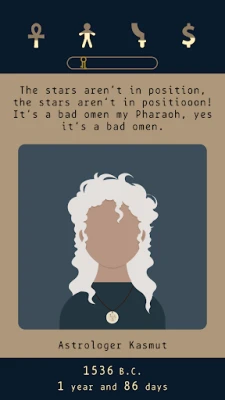
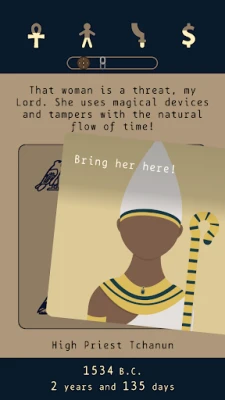
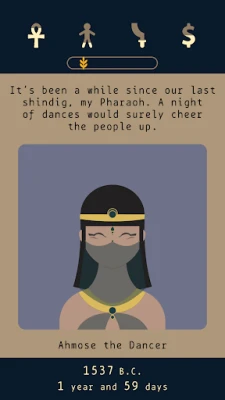
Imagine awakening in the year 1750 BC, surrounded by the grandeur of ancient Egypt. This enigmatic civilization, rich in history and culture, beckons you to uncover its secrets. As you step into this world, you realize that your actions may hold the key to the survival of not just a kingdom, but the entire world. This article delves into the fascinating aspects of ancient Egypt, exploring its mysteries and the pivotal role it plays in history.
The Allure of Ancient Egypt
Ancient Egypt captivates the imagination with its monumental architecture, intricate hieroglyphs, and profound mythology. The civilization flourished along the banks of the Nile River, which provided sustenance and facilitated trade. The Egyptians' advanced understanding of mathematics and astronomy allowed them to construct awe-inspiring pyramids and temples that still stand today.
Key Elements of Ancient Egyptian Society
To understand the significance of ancient Egypt, one must explore its societal structure, religion, and innovations.
1. The Pharaoh: A Divine Ruler
The pharaoh was not merely a king; he was considered a god on earth. This divine status granted him absolute power over the land and its people. The pharaoh's responsibilities included maintaining ma'at, the ancient Egyptian concept of truth, balance, and order. His role was crucial in ensuring the prosperity of the kingdom.
2. Religion and Mythology
Religion permeated every aspect of ancient Egyptian life. The Egyptians worshipped a pantheon of gods and goddesses, each representing different facets of life and nature. Temples dedicated to these deities served as centers of worship and community gatherings. The belief in the afterlife was also paramount, leading to elaborate burial practices and the construction of monumental tombs.
3. Innovations and Contributions
Ancient Egyptians made significant advancements in various fields, including medicine, engineering, and agriculture. Their knowledge of anatomy and surgical techniques laid the groundwork for future medical practices. The development of hieroglyphics as a writing system allowed for the documentation of history, religious texts, and daily life, preserving their legacy for millennia.
The Mysteries Awaiting Discovery
As you navigate through this ancient world, you encounter numerous mysteries that challenge your understanding. The Sphinx, with its enigmatic smile, guards secrets of the past. The Great Pyramid of Giza, a marvel of engineering, raises questions about the methods used in its construction. Each artifact and monument tells a story, inviting you to piece together the puzzle of ancient Egyptian civilization.
Engaging with the Past: A Call to Action
As you immerse yourself in the wonders of ancient Egypt, consider the importance of preserving this rich heritage. Archaeological efforts continue to uncover new findings, shedding light on the lives of those who came before us. If you possess a passion for history and language, you can contribute to this ongoing journey. Translating ancient texts and sharing knowledge helps keep the spirit of ancient Egypt alive.
Join the Conversation
Currently, the exploration of ancient Egypt is supported in multiple languages, including English, Italian, Russian, Turkish, French, Spanish, Chinese, Japanese, Vietnamese, Portuguese, Polish, Hungarian, Indonesian, Czech, Arabic, Slovak, German, Greek, Finnish, and Romanian. If you are interested in helping translate materials related to this fascinating civilization, reach out to the community and share your skills.
Conclusion: The Legacy of Ancient Egypt
In conclusion, the journey back to 1750 BC in ancient Egypt reveals a civilization that continues to inspire awe and curiosity. Its rich history, complex society, and enduring mysteries remind us of the importance of understanding our past. As we explore these ancient wonders, we not only honor those who came before us but also pave the way for future generations to appreciate the legacy of ancient Egypt.
Rate the App
User Reviews















Popular Apps









Editor's Choice