

Latest Version
1.0.1
May 29, 2026
Thriv
Games
Android
0
Free
io.chesspuzzles.ChessPuzzlesTactics
Report a Problem
More About Chess Puzzles and Tactics
Mastering Chess Tactics: A Comprehensive Guide to Essential Puzzles
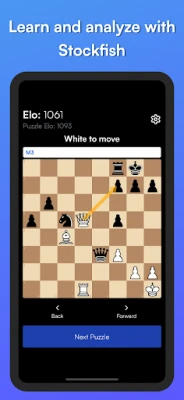
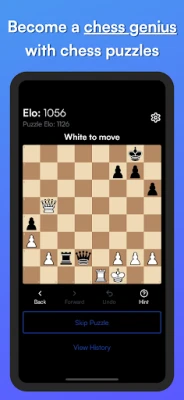
Chess is a game of strategy, foresight, and tactical brilliance. To excel, players must familiarize themselves with various tactical motifs and puzzles that can arise during a match. This article delves into a range of essential chess puzzles, each designed to enhance your tactical understanding and improve your gameplay. Whether you are a novice or an experienced player, mastering these tactics will elevate your chess skills.
1. Advanced Checkmates
Advanced checkmates require a deep understanding of piece coordination and positioning. Familiarize yourself with complex mating patterns that can arise in endgame scenarios. Mastering these will enable you to convert winning positions into victories.
2. Alekhine's Gun
Alekhine's Gun is a powerful formation involving two rooks and a queen aligned on the same file. This tactic can create devastating threats against the opponent's king, often leading to a swift checkmate.
3. Attacking the Castled King
Understanding how to launch an effective attack against a castled king is crucial. This involves recognizing weaknesses in the opponent's pawn structure and exploiting them with your pieces.
4. Back Rank Tactics
Back rank tactics often lead to checkmate when the opponent's king is trapped on the back rank. Look for opportunities to deliver checkmate by placing your rooks or queen on the back rank, especially when the opponent's pieces are unable to defend.
5. Basic Checkmates
Every chess player should master basic checkmates, such as the king and queen versus king, and king and rook versus king. These fundamental techniques are essential for converting winning positions into victories.
6. Battery Formation
A battery formation involves aligning two pieces, typically a queen and a rook, on the same file or diagonal. This setup can create powerful threats and is particularly effective in attacking the opponent's king.
7. The Bishop Pair Advantage
The bishop pair can dominate the board, especially in open positions. Understanding how to utilize the strengths of both bishops can lead to tactical advantages and control over the game.
8. Clearance Sacrifice
A clearance sacrifice involves giving up a piece to clear a path for another piece to attack. This tactic can create unexpected threats and open lines for your pieces to exploit.
9. Decoy and Deflection
Decoy and deflection tactics involve luring an opponent's piece away from its defensive position. By sacrificing a piece or creating a distraction, you can expose weaknesses in your opponent's setup.
10. Defensive Strategies
Effective defense is just as important as offense in chess. Learn to recognize defensive tactics that can help you protect your king and pieces from threats while maintaining counterplay opportunities.
11. Desperado Tactics
Desperado tactics involve sacrificing a piece to create a counter-threat. This can turn the tide of the game, especially when your opponent is unprepared for the sudden shift in dynamics.
12. Discovered Attacks and Checks
Discovered attacks occur when one piece moves away, revealing an attack from another piece. This tactic can lead to powerful threats, including discovered checks that force the opponent to respond defensively.
13. Double Check Tactics
A double check occurs when two pieces simultaneously attack the opponent's king. This tactic is particularly effective, as the only response is to move the king, often leading to a swift checkmate.
14. Doubled Rooks
Doubled rooks on the same file can create immense pressure on the opponent's position. This formation allows for coordinated attacks and can often lead to decisive advantages.
15. En Passant Explained
En passant is a unique pawn capture that can catch opponents off guard. Understanding this rule can provide tactical opportunities to gain material advantage.
16. Endgame Tactics
Endgame tactics focus on converting material advantages into victory. Familiarize yourself with key endgame strategies, such as pawn promotion and king positioning, to secure wins in the final stages of the game.
17. Exchange Sacrifice
Exchange sacrifices involve giving up a piece for a strategic advantage. This can lead to improved positioning or create threats that outweigh the material loss.
18. Fastest Checkmate Techniques
Learning the fastest checkmate techniques, such as the Scholar's Mate, can help you catch opponents off guard, especially in the opening phase of the game.
19. Fianchetto Strategy
The fianchetto involves developing a bishop to the second rank behind a pawn. This setup can create strong diagonal control and is a popular strategy in many openings.
20. Forks and Double Attacks
Forks occur when a single piece attacks two or more of the opponent's pieces simultaneously. Mastering this tactic can lead to material gain and advantageous positions.
21. Hanging Pieces
Identifying hanging pieces—those that are unprotected and can be captured—can provide tactical opportunities to gain material advantage. Always be vigilant for these opportunities during play.
22. Interference Tactics
Interference involves placing a piece between an opponent's attacking piece and its target. This can disrupt their plans and create tactical opportunities for you.
23. Knight Outpost
A knight outpost is a strong position for a knight, typically on the opponent's side of the board. This can create significant pressure and tactical opportunities against the opponent's position.
24. Mating Patterns: Mate in 1, 2, and 3+
Understanding various mating patterns, including mate in 1, 2, and 3 moves, is essential for recognizing winning opportunities. Practice these patterns to improve your ability to deliver checkmate.
25. Mating Nets and Opposite Colored Bishops
Mating nets involve trapping the opponent's king in a confined space, while opposite colored bishops can
Rate the App
User Reviews














Popular Apps










Editor's Choice